
Ensuring N+1 Cooling Tower Reliability During Summer Highs
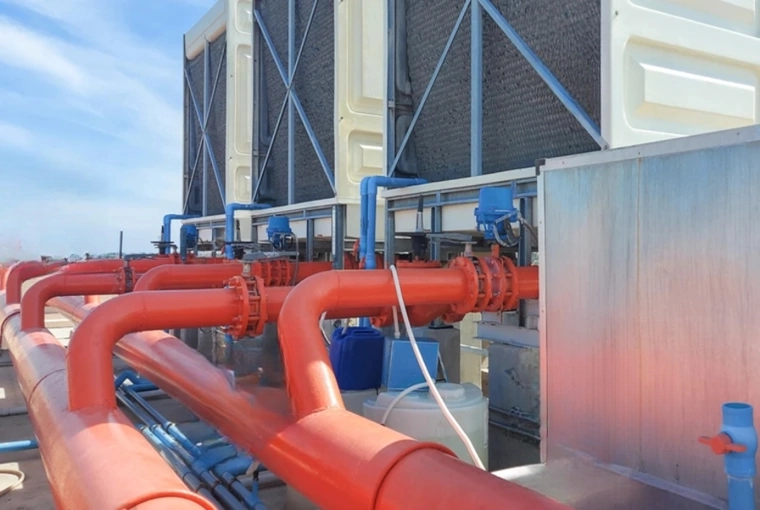
Summer temperatures are no longer just breaking records; they are shattering them. For facility managers overseeing data centers, hospitals, and heavy industrial plants, extreme heat waves escalate standard operational challenges into mission-critical threats.
Your cooling infrastructure’s N+1 redundancy — having the exact capacity required (N) plus one independent backup (+1) — is designed to be your ultimate safety net. But that net is only as strong as your maintenance strategy. When ambient temperatures soar, cooling systems work harder, wear faster, and leave zero margin for error.
If you are evaluating your summer cooling readiness, here are the core strategies to ensure your redundancy doesn't fail when you need it most:
- Extreme wet-bulb temperatures can force backup units into active duty just to maintain baseline cooling, temporarily erasing your redundancy.
- Clean fill media, optimized water treatment, and rigorous mechanical inspections prevent cascading system failures.
- Ensure your system can seamlessly sequence and activate the "+1" tower without human intervention.
- Partner with factory-authorized experts who guarantee fast, 24/7 emergency response times.
The hidden danger extreme heat poses to N+1 systems
N+1 architecture is the gold standard for protecting critical assets. In theory, if a fan motor burns out or a pump fails, the backup unit seamlessly takes over, preventing facility downtime.
However, record-breaking summer heat changes the thermodynamic math. Cooling towers are sized based on historical maximum wet-bulb temperatures (the lowest temperature that can be reached by the evaporation of water). As climate patterns shift and summer highs exceed these original design limits, your primary cooling towers lose efficiency.
To bridge the gap and satisfy the facility's thermal load, building management systems will often trigger the "+1" backup tower. If your redundant unit is running just to fight the weather, you no longer have redundancy. At that point, a single mechanical failure can lead to thermal runaway, IT equipment throttling, or complete facility shutdown.
Proactive strategies for bulletproof summer cooling
To ensure your cooling towers can survive the heat and maintain true N+1 reliability, facility teams must take a proactive, aggressive approach to maintenance.
1. Maximize heat transfer efficiency
When towers operate near maximum capacity, heat transfer efficiency is everything. Any blockage or fouling forces the fans and pumps to work harder, increasing the risk of mechanical breakdown.
Clean the Fill Media: The fill is the heart of the cooling tower. Scale buildup, algae, and airborne debris obstruct airflow and prevent proper water distribution. Professional cleaning and descaling are mandatory before peak summer loads.
Inspect Drift Eliminators and Louvers:Damaged or clogged louvers restrict fresh air intake, while fouled drift eliminators increase static pressure, putting unnecessary strain on fan motors.
2. Lock down mechanical integrity
Heat is the enemy of moving parts. High ambient temperatures degrade lubricants faster and increase the operating temperature of electrical components.
Vibration Analysis:Don't wait for a bearing to scream. Vibration analysis can detect microscopic imbalances in fans, gearboxes, and motors long before they cause a catastrophic failure.
Belt and Drive Alignment:Belt-driven systems stretch and slip over time. Ensuring proper tension and laser-aligning the sheaves will prevent sudden power transmission failures on the hottest days.
3. Calibrate water treatment protocols
Evaporation rates skyrocket during summer heat waves. As water evaporates, the concentration of dissolved solids left behind increases rapidly.
Prevent Scaling and Corrosion:If your automated blowdown valves and chemical dosing systems aren't calibrated for higher summer cycles of concentration, scale will quickly insulate your heat exchangers.
Legionella Compliance:Warmer water temperatures create ideal breeding grounds for dangerous bacteria. Strict chemical regimens aren't just about efficiency; they are a critical life-safety and compliance mandate.
4. Stress test your automation
Redundancy is useless if the system doesn't know how to deploy it.
Sequence Testing:Physically simulate a failure in your primary (N) system. Does the backup (+1) activate immediately? Do the isolation valves open and close fully? Does the variable frequency drive (VFD) ramp up to the correct speed? Identify software or sensor lags now, not during a crisis.
Don't face the summer heat alone
When the temperature hits 100 degrees and a primary tower goes down, you don't have time to shop for a contractor. You need a partner who already knows your system and can deploy immediately.
For over 35 years, Landover Cooling Tower Service has been protecting the most critical facilities across the Tri-State area and Northern Virginia. Because we understand that your cooling towers are the heartbeat of your facility, we offer:
- Rapid Emergency Response:24/7/365 availability with 2–4 hour emergency response times.
- Factory-Trained Expertise:Our technicians are factory authorized and certified to service BAC, Marley, and Evapco towers.
- Comprehensive Service:From routine maintenance and heat exchanger cleaning to major mechanical overhauls and complete tower replacements.
Ensure your N+1 design remains a guarantee, not a gamble. Contact Landover Cooling Tower Servicetoday to schedule your summer cooling inspection and safeguard your facility against the heat.