
Ice, Slips, and Falls: How to Maintain a Safe Work Area Around Your Cooling Tower in Winter
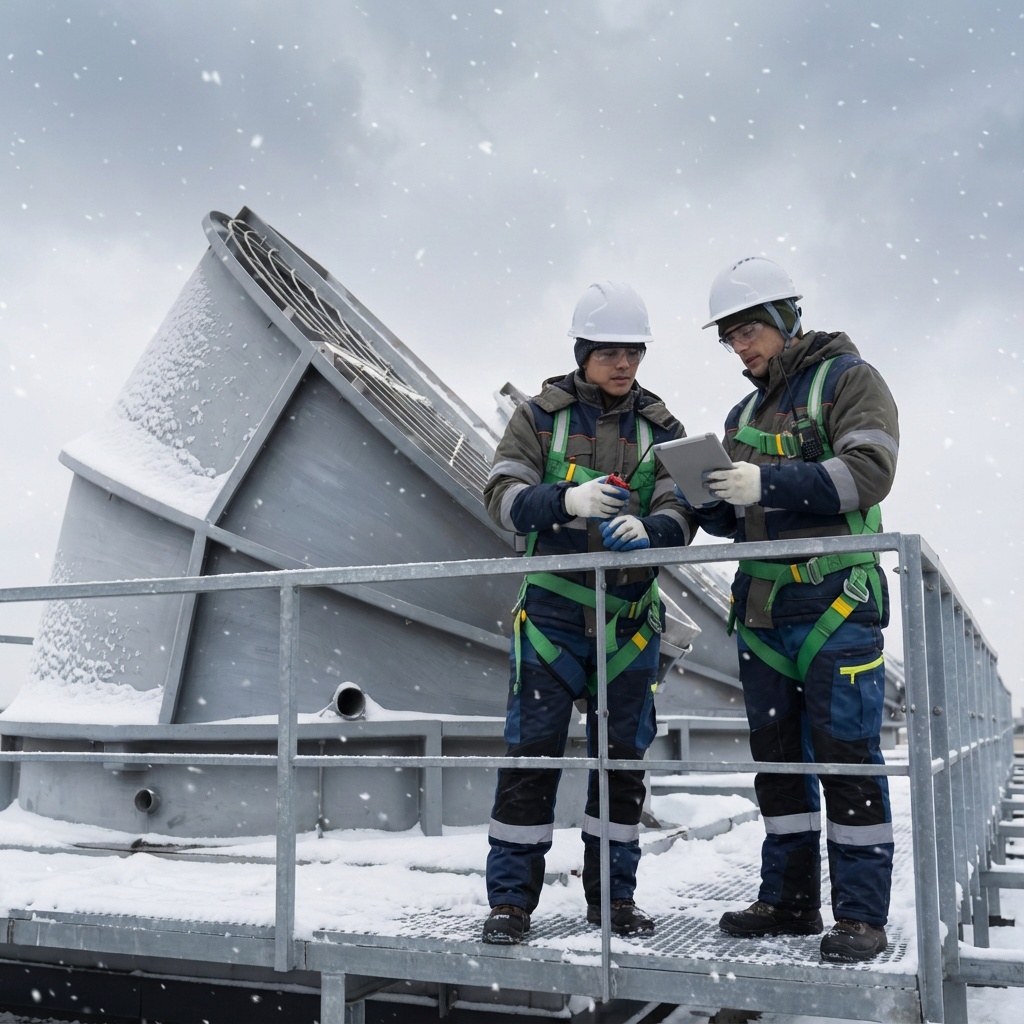
Quick Summary: Winter Safety Around Cooling Towers
- Ice and snow around rooftop cooling towers significantly increase slip-and-fall risks
- Winter conditions can damage roofing materials, equipment, and access pathways if left unmanaged
- Regular inspections and early ice removal help prevent injuries and costly downtime
- Using roofing-safe ice melt products protects both workers and facility infrastructure
- Proactive winter safety practices support OSHA compliance and uninterrupted operations
Did you know that a single, serious slip-and-fall injury on your property can cost your facility upwards of $40,000 in medical fees, lost time, and legal costs?
Winter brings unique, high-stakes challenges for facilities that rely on rooftop cooling towers. Ice buildup on equipment and surrounding surfaces significantly increases the risk of slips, falls, and injuries. The risk extends beyond personal safety. Icy conditions can cause significant structural damage to equipment and roofs, leading to costly downtime and potential OSHA compliance issues.
By taking simple, proactive measures, your facility can stay safe, compliant, and operational during the colder months.
Understanding the Risks of Winter on Rooftop Cooling Towers
Rooftop cooling towers are essential for facility operations. During the winter, ice and snow accumulation can turn these areas into hazardous zones. Even small patches of ice can cause slips that lead to serious injuries. In addition, falling ice or water runoff can damage roofing materials or mechanical components, leading to costly repairs and downtime.
Common winter risks around cooling towers include:
- Slippery Walkways: Water from condensation or ice melt can freeze on the access path.
- Ice Build-Up on Equipment: Fans, pipes, and coils are prone to freezing, creating sharp edges or falling hazards.
- Rooftop Damage: Harsh winter conditions and improper application of de-icing chemicals can degrade roofing surfaces.
Your 5-Point Winter Safety Checklist for Cooling Towers
Maintaining a safe work area around your cooling tower requires planning and preventive measures. Consider the following winter safety tips for facilities:
- Regular Inspections: Monitor the cooling tower and surrounding rooftop areas for ice buildup, snow accumulation, and slippery surfaces. Early detection allows you to address hazards before they cause injuries or damage.
- Safe Ice Melt Usage: Use ice melt products that are safe for roofing materials. Avoid harsh chemicals, like standard rock salt (sodium chloride), that can damage shingles, roofing membranes, or waterproof coatings. Instead, opt for calcium magnesium acetate (CMA) or potassium acetate for a safe, non-corrosive solution.
- Maintain Clear Access Paths: Keep ladders, stairs, and rooftop walkways free of ice and debris. Clearly mark any hazards with high-visibility signage to alert personnel.
- Protect Equipment from Freezing: Cover sensitive equipment where possible. Pay special attention to fans, pipes, and valves, and ensure heat tracing systems are functioning. This prevents accidents and protects your cooling tower investment.
- Employee Awareness and Training: Educate staff on winter workplace safety practices, including proper footwear, safe movement protocols on icy rooftops, and clear hazard-reporting procedures.
Prioritize Rooftop Safety in the Winter
Rooftop safety in winter goes beyond preventing slips; it’s about protecting your facility's infrastructure. Ice buildup can lead to leaks, corrosion, and mechanical failure if left unchecked.
Landover Cooling Tower Company emphasizes the importance of routine maintenance combined with winter safety protocols to ensure both employees and equipment are protected.
Partner with Landover for Certified Winter Safety
Preventing slips, falls, and ice-related damage around your cooling tower doesn’t have to be a seasonal headache. Landover Cooling Tower Company’s factory-trained technicians provide comprehensive inspections, maintenance, and safety guidance to keep your rooftop environment secure throughout the winter months.
Contact our team today and speak with our experts to improve your facility's winter safety.